Skip to story

Masha / Maria

The Map of Survival

For three years in Nazi-controlled Europe, she lived under a false name. This is the story of how she survived — and how she chose to become herself again.

In January 1997, Masha Klaynberg sat before a camera in Hollywood, Florida, and told her story. She was born Masha Sirotkin in Bobruisk, Belarus. During the war, she survived by becoming someone else. This is the map of her journey.

Before the war

Bobruisk

Soviet Union1923–1941·Bobruisk, Belarus

Her father, Leiba Sirotkin, was a bookkeeper. Her mother had run a clothing store before the Bolsheviks came. They lived in a country house with no running water and no electricity — light came from a gasoline lamp, water from a well.

Masha had a sister, Hasia, and a brother, Grisha. At home they spoke Russian; the grandparents spoke Yiddish. She walked an hour each way to a public school where Jewish and Christian children sat together.

She planned to become a teacher and enrolled in college, but had not yet finished when everything changed.

It was a Jewish city.

Masha Klaynberg, Shoah Foundation testimony, 1997
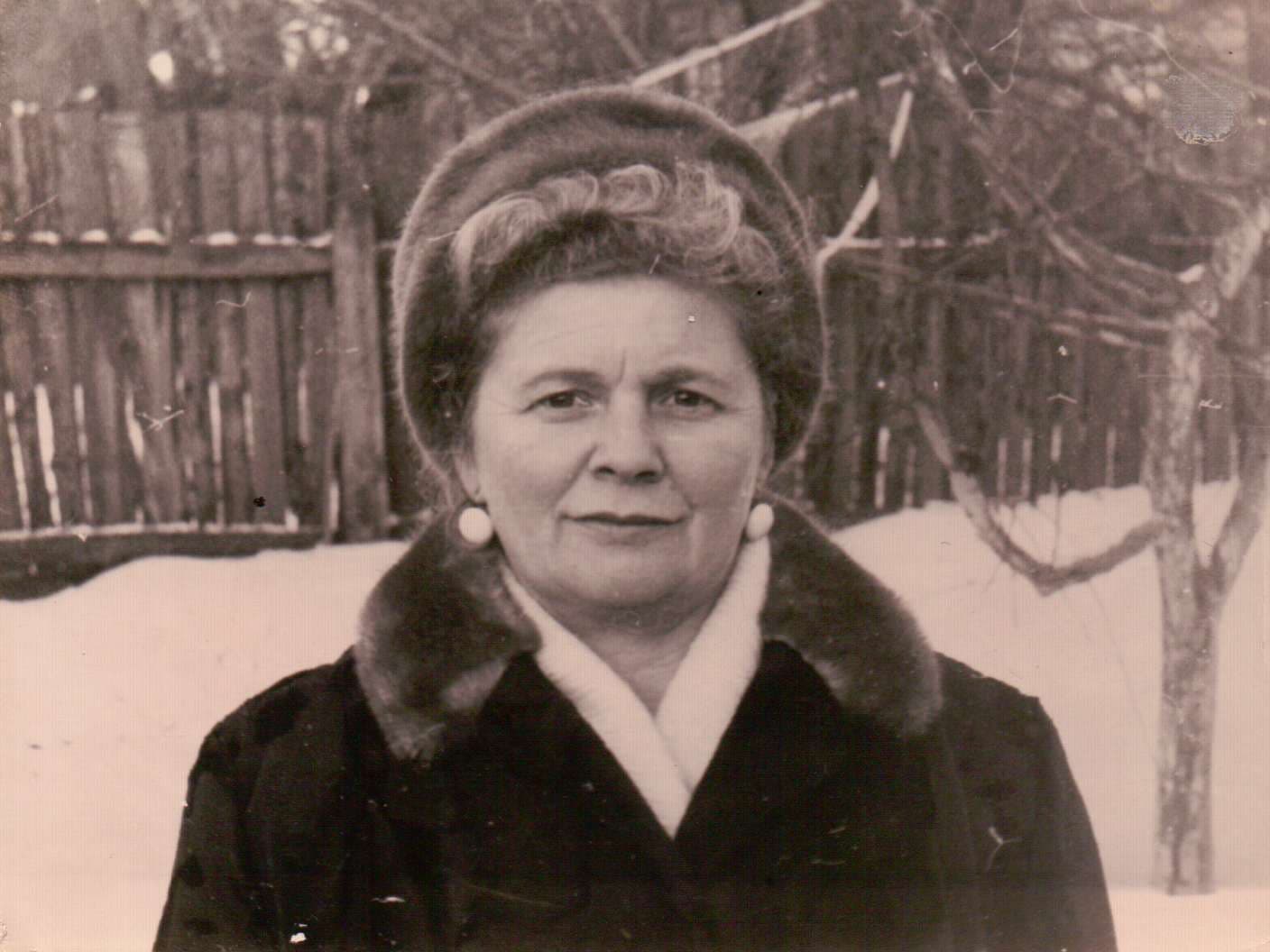
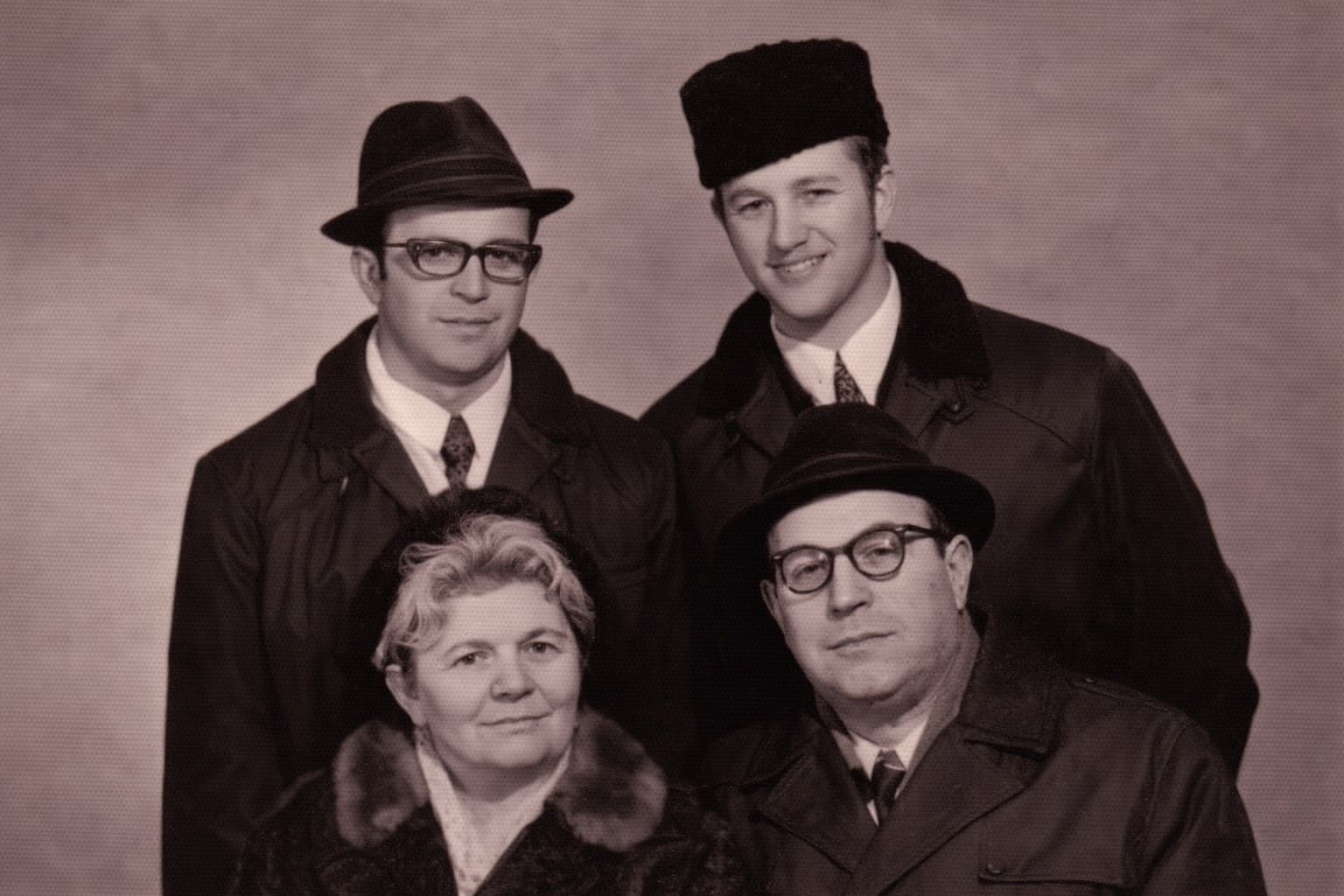
Masha in winter, wearing a fur-collared coat, standing in a snowy yard in Bobruisk.
Masha in Bobruisk, postwar.
Bobruisk under occupation

The Ghetto

Nazi GermanySeptember 1941·Bobruisk, Belarus

In June 1941, the Germans arrived. The local police identified the Jewish families. By September, every Jewish person in Bobruisk had been forced into the ghetto.

Two or three families were crowded into each house. There were no windows, no doors, no heat. It was already cold in Belarus by October. There was no food.

They were held there for two months and twenty days.

In September 1941, they put every Jewish people in this city, Bobruisk, in the ghetto.

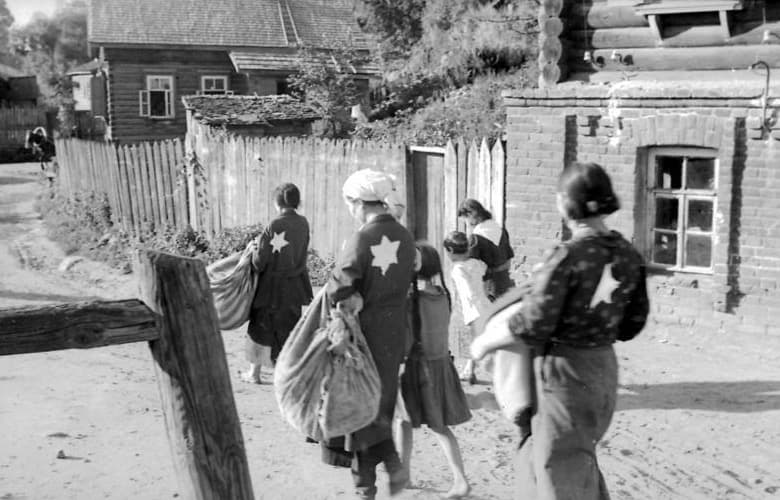
A fenced ghetto area in Mogilev, Belarus, 1941.
The ghetto in Mogilev, Belarus, 1941. Conditions in nearby Bobruisk were similar.

The Liquidation

Nazi GermanyNovember 1941·Bobruisk — Kamenka

The Germans told the ghetto residents to put on their best clothes and jewelry. Then they took everything. Trucks carried the people to the villages of Kamenka and Yalovica outside the city.

An estimated 7,000 Jews from the Bobruisk ghetto were murdered there in November 1941.

Her mother pushed her out of the crowd, toward the Russian bystanders. She said nothing. The police did not notice. The Germans did not notice. She survived because she did not look Jewish.

I survived because my face was — I didn’t look like a Jewish girl. And the mother put me in with the Russian people.

Execution sites at Kamenka and Yalovica are documented in Holocaust records. Coordinates placed at Kamenka.

Shelter among neighbors

The Countryside

Nazi GermanyLate 1941 – January 1942·Rural area near Bobruisk·on foot

She escaped to the countryside where her parents had worked on a collective farm. People there recognized her from childhood.

She found refuge with two Jewish families — the Rapkins and the Rusinovs. They took her in and shared their food.

In late January, something told her to leave. She and two other girls went to a Russian family for breakfast. A boy ran in — twelve or thirteen years old — shouting that the police and Germans were coming for the Jewish families. They fled to a small forest and watched as the families who had sheltered her were taken away.

I lived with them. They give me food.

Location approximate. Testimony describes the area as countryside near Bobruisk.

A borrowed name

Village to Village

Nazi GermanyFebruary – March 1942·Belarus countryside·on foot

She went first to a man named Shinkarenka, whose family she had known as a child. He had told her once: if something happens, come to me. She hid behind a large brick stove. When the family was out, she cleaned the house, washed clothes, peeled potatoes.

But a woman discovered her and screamed — "You're hiding a Jewish girl! They will burn the village!" After that, Masha left.

She wandered from village to village. Sometimes she came to a house and said: I am a refugee. Not that she was Jewish. People gave her food and a place to sleep. The Belarusians and Ukrainians, she said, were very, very good people.

I wandered from one village to another village. I wandered, wandered.

Location is approximate.

A temporary home

Antonovka

Nazi GermanyMarch – June 1942·Antonovka, Gomel Region, Belarus·on foot

She arrived in March. A woman named Safiya took her in — her husband was in the Red Army, and she needed help with the children and the farm.

For three months, this was something close to stability — though not safety. She milked the cow, worked in the garden, looked after the children. It was labor for shelter.

In the last week of June, the police came with a German officer and took her. She asked where they were taking her. They said, “You don’t ask questions.”

Where are you taking me? — You don’t ask questions.

Village named in testimony. Identification among multiple settlements of this name is tentative.

A false name becomes official

Priluki

Nazi GermanyJune 1942·Priluki, Ukraine·captured

They brought her to a house filled with young girls and boys. They were told they were being taken to Germany for work.

At registration, a police officer asked her name. She did not have documents — her Jewish passport was gone, abandoned, destroyed. She gave the name Maria Shinkarenka.

He gave her a paper. That paper became her identity for the next three years.

The police asked my name. I told him ‘Maria Shinkarenka.’

Across occupied Europe

Stuttgart

Nazi GermanySummer 1942·Stuttgart, Germany·by train

The journey from Priluki to Stuttgart crossed the full breadth of occupied Europe. She was one of thousands of young people from the East sent into forced labor.

She stayed in Stuttgart for about three weeks. Then they put her on a train heading north.

Then they put us in trains and brought us to Germany.

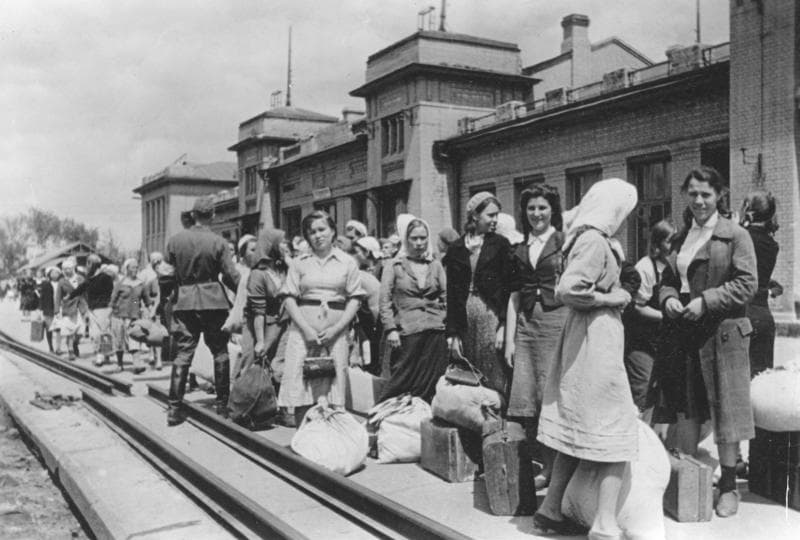
Young people from Eastern Europe being transported for forced labor in Germany, 1942.
Eastern European laborers transported to Germany, 1942.
Forced labor

Ordensburg Krössinsee

Nazi Germany1942–1945·Falkenburg, Pomerania·by train

Ordensburg Krössinsee, near Falkenburg in Pomerania, had been built as an elite training school for the Nazi party. During the war, it held forced laborers. About a hundred girls worked there.

She wore a patch marked "OST" — identifying her as a laborer from the East. She was Maria Shinkarenka from Ukraine.

For nearly three years she kept silent. The other girls did not talk about religion. They were young, from families that were not religious.

From June 1942 to March 25, 1945.

Nobody I told, nobody I told about Jewish.

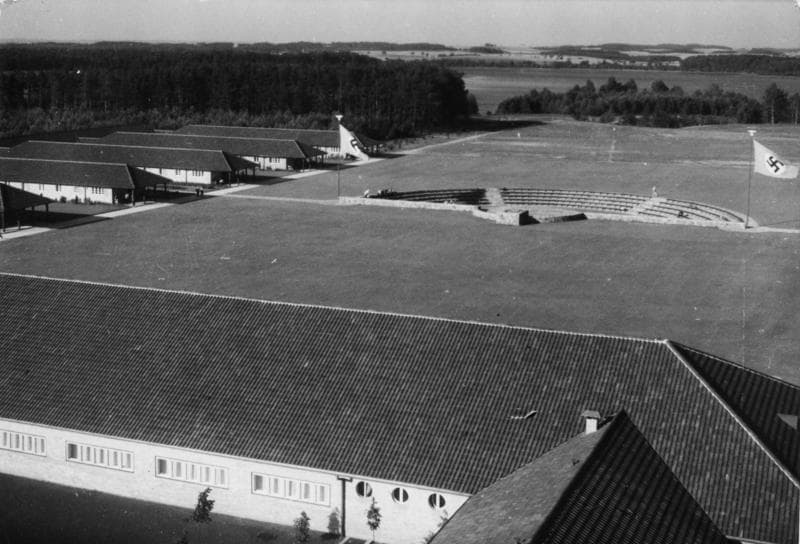
The Ordensburg Krössinsee complex near Falkenburg, photographed circa 1934.
Ordensburg Krössinsee, circa 1934. A Nazi party training complex later repurposed during the war.

Now Złocieniec, Poland. Then part of Pomerania, Germany.

Fear of the end

The Front Approaches

Nazi GermanyEarly 1945·Falkenburg area

In 1945, standing behind the building where they lived, she saw Katyusha rockets. The Russian army was approaching.

The routine ended. Fear began.

I thought the Germans might kill everybody.

Location is approximate.

The Escape

Nazi GermanyMarch 1945·Near Falkenburg·by wagon

They put everyone from the camp onto horses and wagons. No one was told where they were going. She believed they were being taken to be killed.

When the wagon stopped, she and one woman got out.

I thought they were going to kill us. And I escaped.

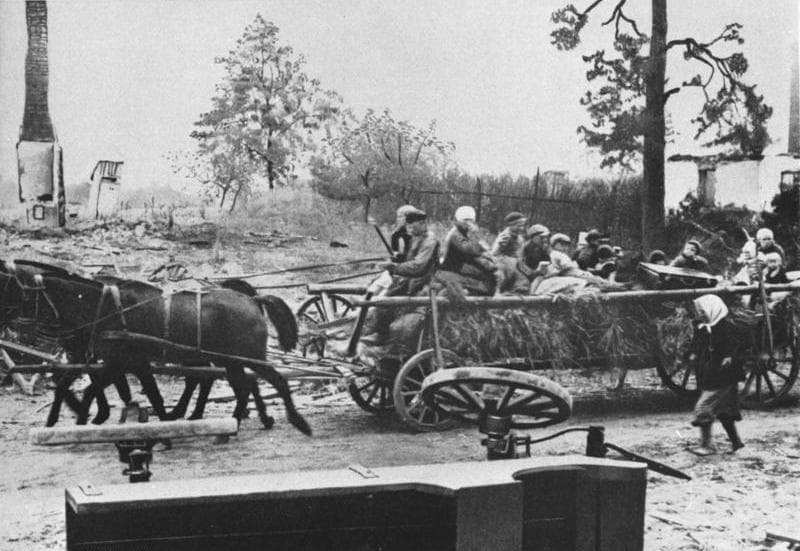
Civilians evacuated on horse-drawn wagons in eastern Germany, 1945.
Evacuation by wagon in eastern Germany, 1945.

Location is approximate.

Between armies

The Collapse

Nazi GermanyMarch 1945·Near Falkenburg·on foot

They came to a German house and asked to stay the night. During the night there was fighting — Russian, German, Polish armies. In the morning, it was quiet.

They found Italian soldiers locked in a building. Polish officers came, found the key, opened the lock. German soldiers were hiding in the basement and were taken prisoner.

Multiple armies, abandoned prisoners, soldiers hiding in basements. In the morning, the Germans were gone.

We found Italian soldiers locked in a building.

Settlement not named in testimony. Location approximate, placed near the Falkenburg area based on context.

Interrogation

The Truth

Soviet Union1945·Soviet-controlled territory

A Russian soldier found them and brought them to a large house filled with people — French, German, Russian. He told them: you are now with the Russian KGB.

At two o'clock in the morning, a young officer came for her. A military captain asked: where are you from? She told him the Maria Shinkarenka story — the same one she had repeated for three years.

Then he asked: were you a Young Pioneer? She cried.

She told him: everything I told you is wrong. I am a Jewish girl.

The captain told her: nobody knows you are Jewish. When you go home, you can stay as you are — not Jewish — or you can go back to being Jewish.

I am a Jewish girl.

Location is approximate.

Bobruisk Again

Soviet Union1945–1980·Bobruisk, Belarus

She returned to Bobruisk and registered herself as Jewish. Everyone there knew who she was — her friends, her mother's friends, her school friends.

An official questioned her: why did you stay in Ukraine? Why didn't you go to the partisans? She told him — in 1941, at the beginning of 1942, there were no partisans. And the partisans did not take Jewish people.

She married Alexander — Sasha. There was no wedding, no white dress. Just a registration and a small dinner with friends. No family was present — not for him, not for her.

Their sons were born — Lev in 1946, Joseph in 1953.

I came to my city, Bobruisk, and I took my registration in the archive, and I am Jewish.

The Klaynberg family — Masha, Alexander, and their two sons Lev and Joseph.
The Klaynberg family.

A Life Rebuilt

United States1980–2009·Bobruisk — Italy — United States

Joseph finished school with a gold medal but was denied entry to medical school. The official told him: “We need national cadres, not Jewish — two percent Jewish.”

She had survived the war, reclaimed her name, and rebuilt her life — but the antisemitism had not ended. In the Soviet Union, it was institutional: quotas in education, barriers in employment, a ceiling on Jewish life. It was this that drove the family to leave.

In 1979, Joseph emigrated through Italy to America. In 1980, Masha and Alexander followed. Lev and his family came nine years later.

Her grandson asked her once: you had a grandma? A grandfather? She did not know how to tell him.

On January 23, 1997, in Hollywood, Florida, she sat before a camera and told this story.

I think it is the best time in my life, when I live here. It's a pain that my brother and sister didn't come to see this life.

Masha Klaynberg, Shoah Foundation testimony, 1997

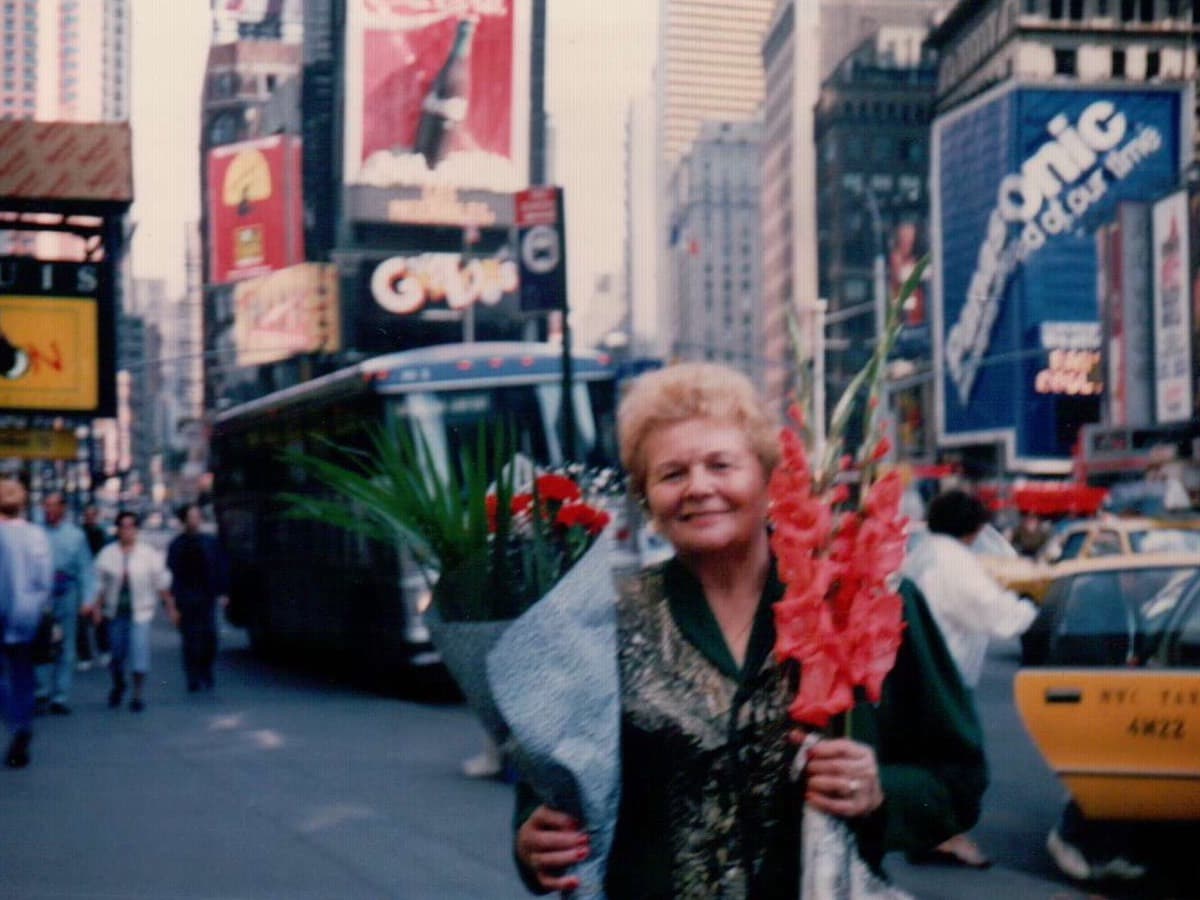
Masha holding red gladioli in Times Square, New York, smiling broadly.
Masha in Times Square, New York.
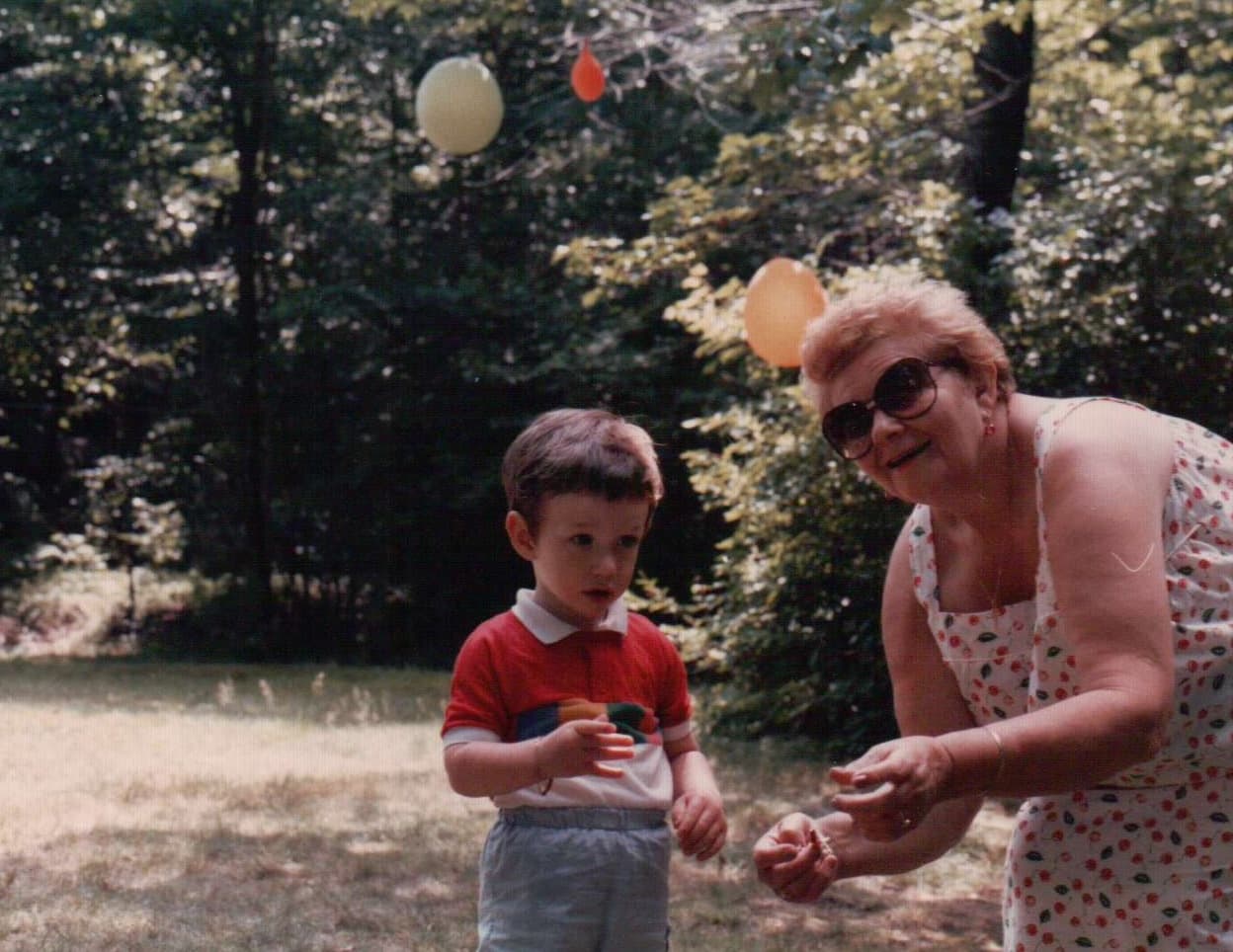
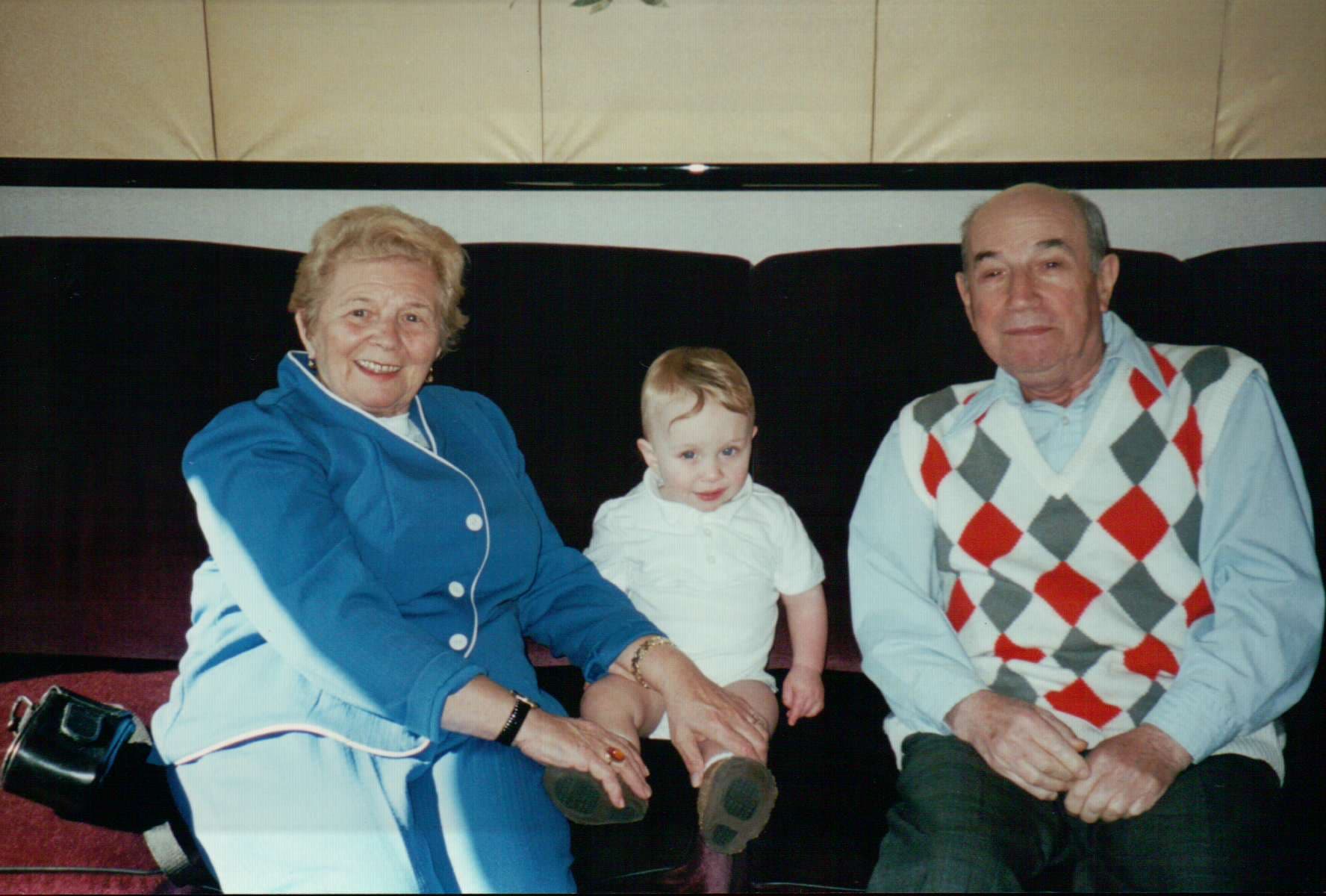
Masha with her grandson Eddie.
Masha and Eddie.
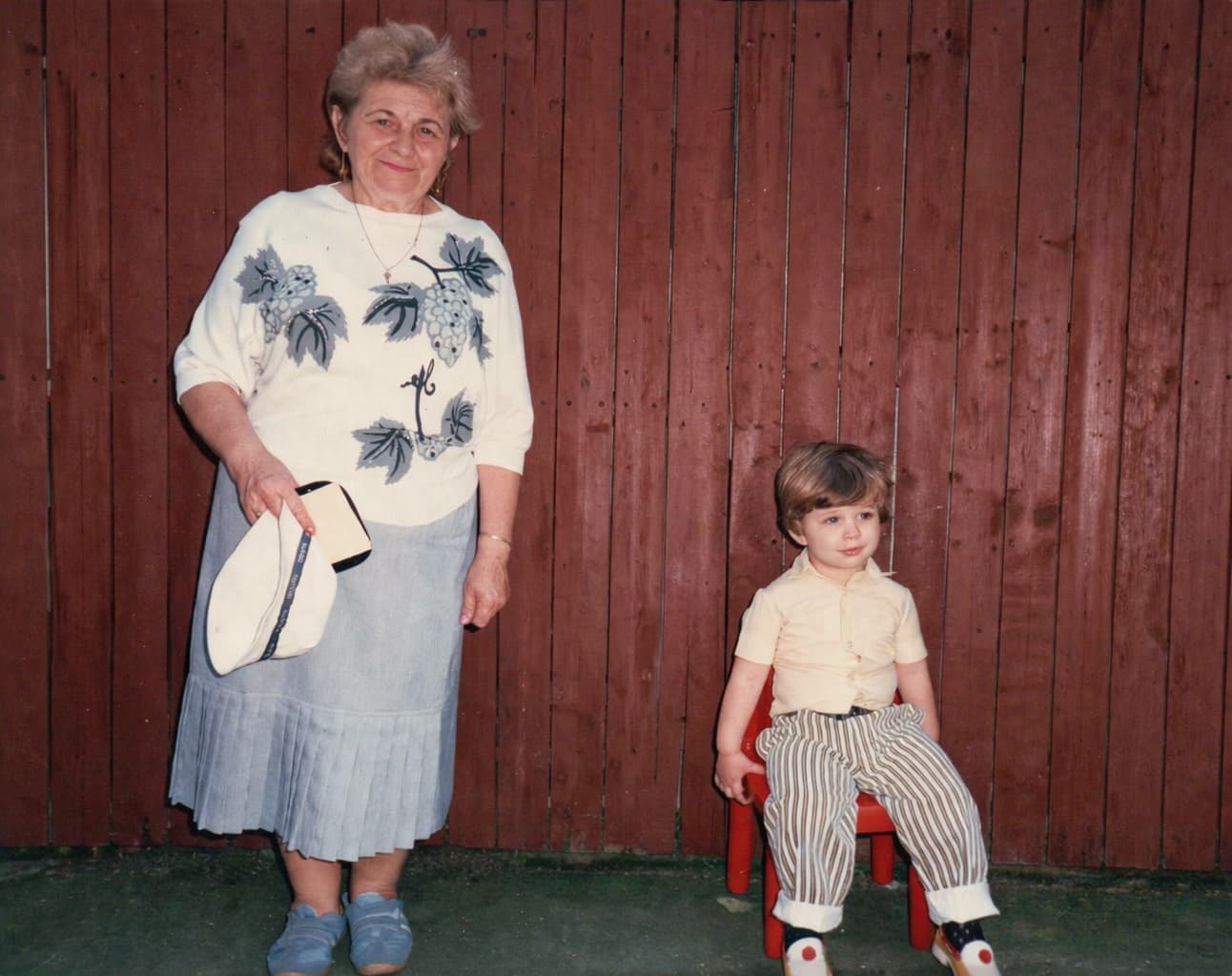
Masha with her grandson Danny.
Masha and Danny.
Masha with her grandson Robert.
Masha, Robert and Sasha.

Masha Klaynberg gave her testimony fifty-two years after the war ended. She wanted her grandchildren to know.

Her father Leiba, her mother, her sister Hasia, and her brother Grisha were killed at Kamenka in November 1941. She was the only one who survived.

She and Alexander were married for fifty-four years.

“When they’re older, they know what they want to be in the future.”
Headstone of Masha and Alexander Klaynberg.

Washington Cemetery, Brooklyn, New York

Alexander Klaynberg (January 11, 1921 – January 27, 2000)
Masha Klaynberg (September 22, 1923 – May 3, 2009)

Sources & Methodology →